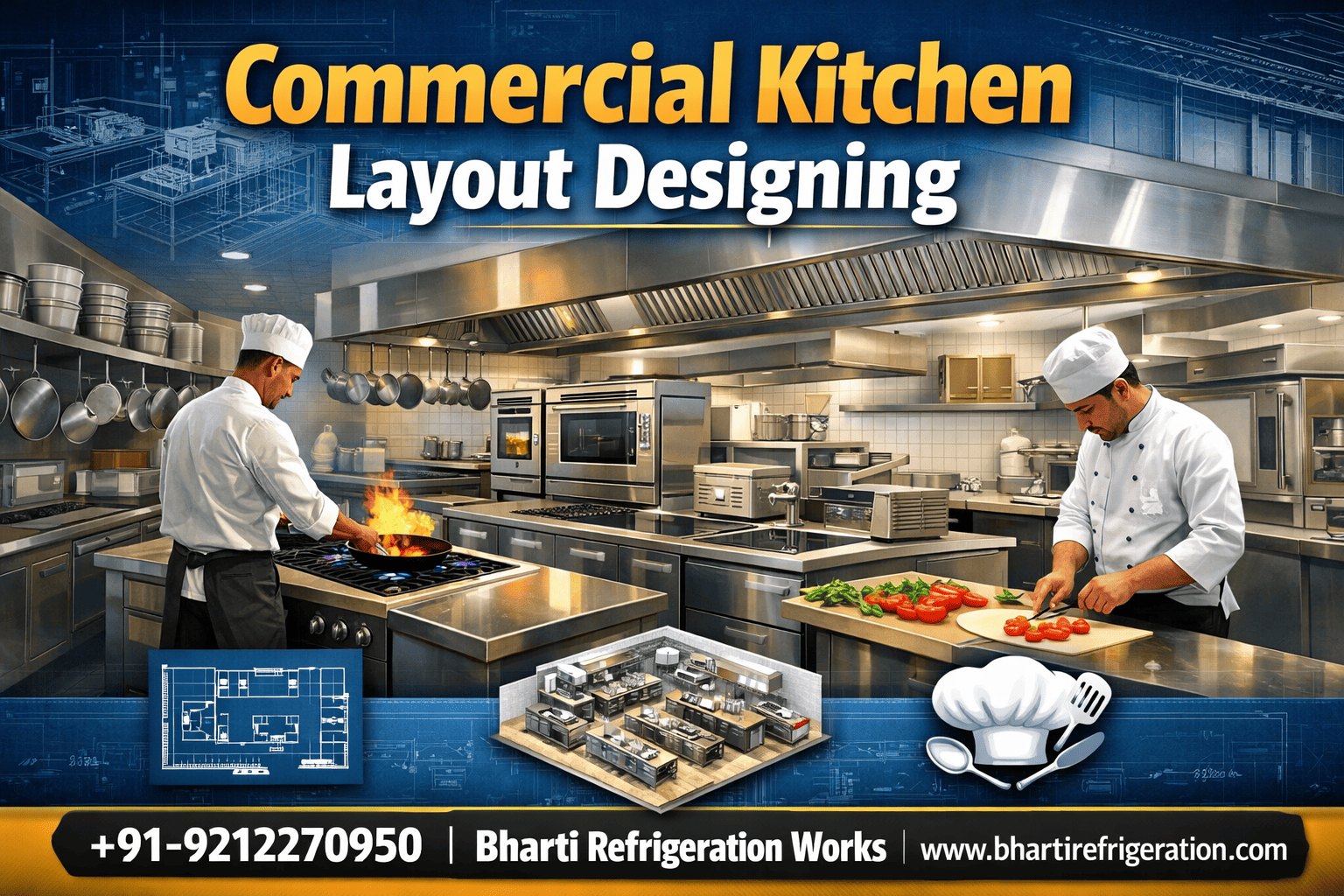
Smart & Efficient Commercial Kitchen Layout Designing
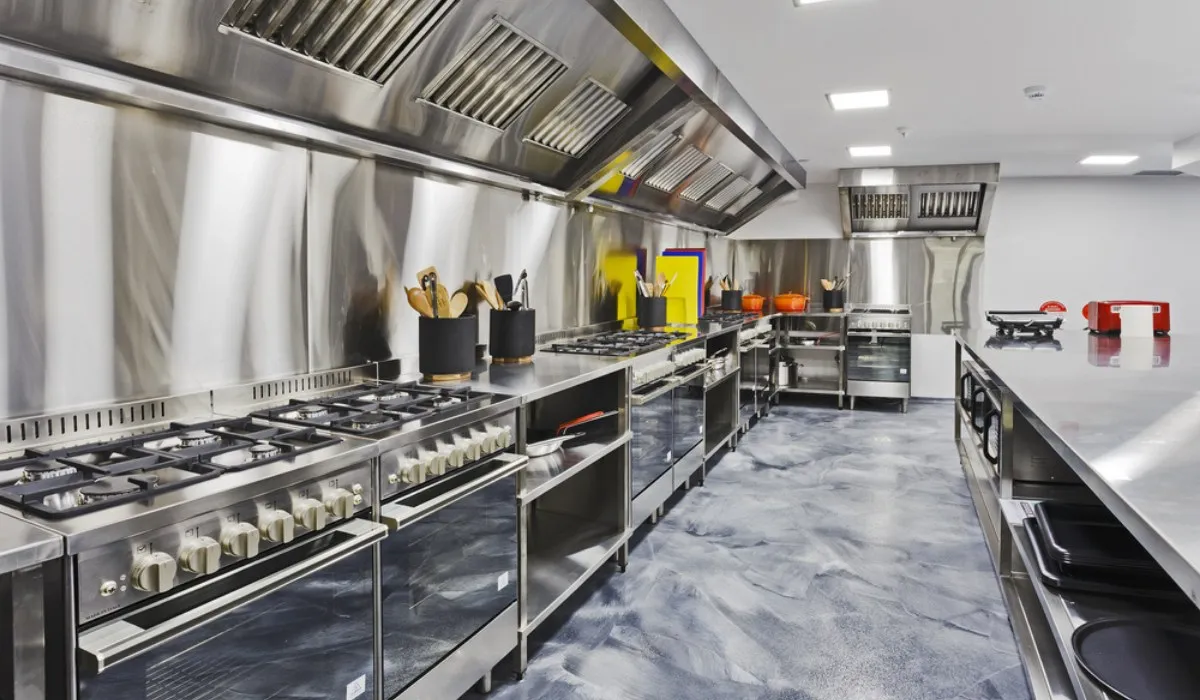
The Blueprint for Efficiency at Bharti Refrigeration Works
Imagine a busy restaurant where chefs dodge each other, orders pile up, and fresh ingredients spoil too soon. That chaos often stems from a poor kitchen setup. In the foodservice world, a smart commercial kitchen layout design boosts profits by cutting waste and speeding up service. It also keeps everyone safe amid tight rules on health and fire codes. Bharti Refrigeration Works stands out as a key player here. They craft tough, practical kitchens that handle high demands. With their help, owners turn cramped spaces into smooth operations.
Foundational Principles of Commercial Kitchen Layout Planning
Good kitchen plans start with solid basics. These rules shape every choice, from where to place sinks to how equipment fits. Focus on flow and rules first. That way, your setup works without constant fixes.
Understanding Workflow Styles: Assembly Line vs. Zone Layouts
Think of your kitchen like a factory. An assembly line style suits fast spots like burger joints. Cooks line up tasks in a straight path. Food moves from prep to grill to plate without turns. This cuts time and fits quick-service restaurants.
Zone layouts work better for fancier meals. Divide the space into areas like prep, cooking, and plating. Each zone handles one job. Fine dining halls or event spaces love this. It lets teams focus without bumping elbows. Pick assembly line for speed. Choose zones for variety. Your menu decides the style.
Navigating Health, Safety, and Building Codes
Rules keep kitchens safe and clean. Local codes set minimum space for doors and aisles. Fire safety demands clear paths and sprinklers. NSF standards ensure gear cleans easy. Pick materials like stainless steel that wipe down fast.
Break a code, and you face fines or shutdowns. Always check your area’s rules early. Bharti Refrigeration Works knows these well. They guide you to compliant designs. Safe setups save money on accidents too.
Calculating Space Requirements: Cubic vs. Square Footage
Space isn’t just floor area. Think in cubic feet for storage height. A walk-in cooler needs room for shelves up high. Square footage covers work paths. Plan 4 to 6 feet around stoves for safe moves.
For each station, add extra for doors that swing open. Refrigeration units from Bharti take up prime spots. Figure 10% more space for growth. Poor math leads to tight squeezes. Smart calcs keep things open and efficient.
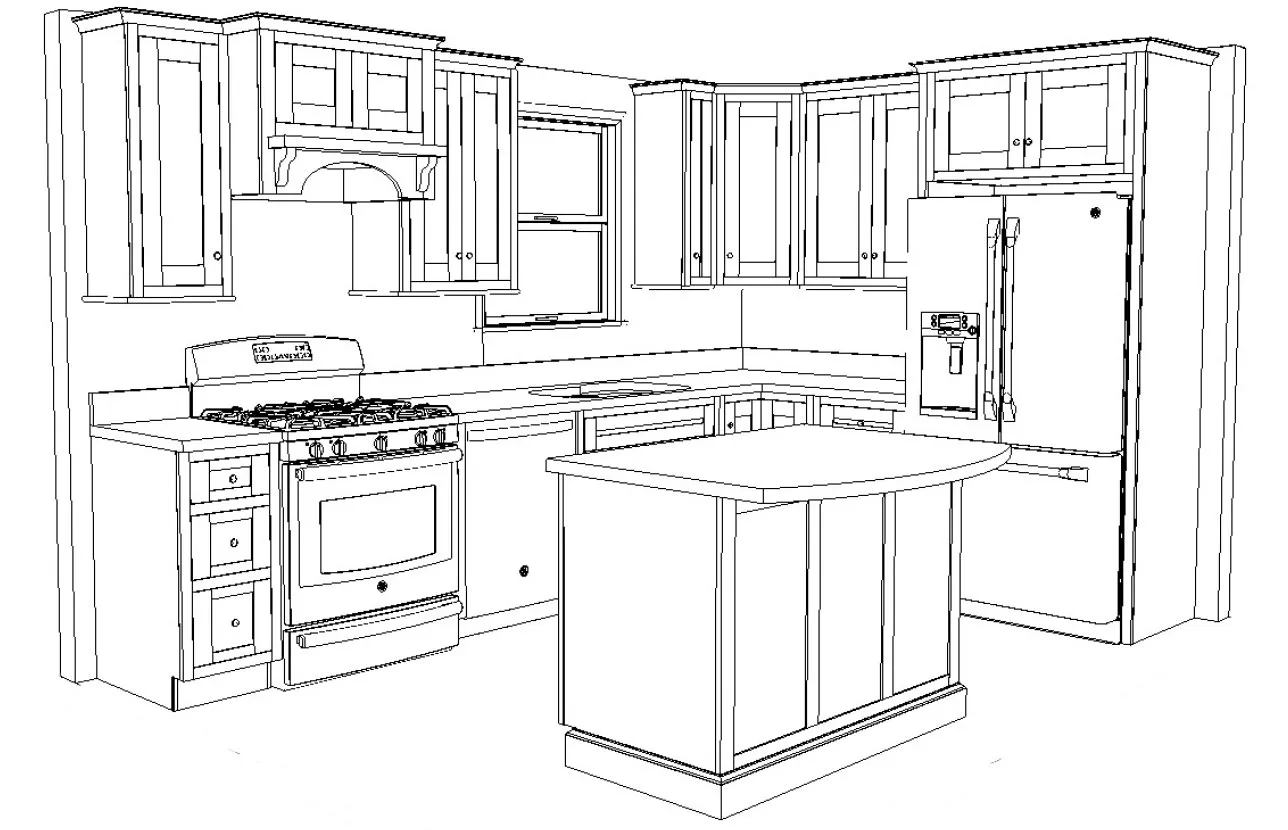
Designing for Peak Operational Efficiency: The Flow of Food
Efficiency means food zips through without delays. Map the path from door to plate. Cut crosses and steps back. This heart of your kitchen pays off in faster turns and happy staff.
The Receiving and Storage Nexus: Cold Chain Integrity
Start at the back door. Goods arrive and head straight to storage. Dry shelves go near for cans and boxes. Walk-in fridges and freezers follow for perishables. Keep the cold chain unbroken to avoid spoilage.
Bharti Refrigeration Works sizes these units right. A small cafe might need a 10-foot cooler. Big operations call for 20-foot models with strong compressors. Place them close to receiving but away from heat. This setup saves energy and keeps food fresh.
- Stock shelves at waist height for easy reach.
- Use labeled bins to speed inventory checks.
- Schedule deliveries during slow hours to ease flow.
Preparation Stations: Ergonomics and Proximity
Prep areas need smart spots. Put sinks and counters near where you chop veggies. Keep ingredients close to cut walks. Standard heights around 36 inches fit most workers.
Add anti-fatigue mats under feet for long shifts. Place cutting boards on sturdy bases. Proximity to the cooking line shaves minutes off tasks. Ever chased a missing knife across the room? Good placement stops that.
The Cooking Line (Hot Line) Configuration: Power and Ventilation
Group your heat sources together. Ranges, fryers, and griddles form the hot line. Combi ovens slot in for versatility. Power outlets must handle the load without trips.
Ventilation hoods go right above. They pull smoke and grease away. Poor placement means hot air lingers and tires staff. Aim for even spacing. This config boosts output during rushes.
Integrating Essential Equipment: Refrigeration as the Core
Refrigeration anchors the kitchen. It’s not just a box—it’s the heartbeat for fresh food. Bharti Refrigeration Works excels here. They pick units that fit your flow and last.
Under-Counter vs. Reach-In vs. Walk-In: A Strategic Placement Matrix
Choose based on use. Under-counter units hide under prep tables. Grab garnishes fast without bending far. Reach-ins stand alone for quick door opens during service.
Walk-ins handle bulk for big teams. Place them near storage for easy loads. In a sandwich shop, under-counters work for toppings. For banquets, walk-ins store extras. Match type to task for smooth access.
- Under-counter: Ideal for tight spaces and speed.
- Reach-in: Good for mid-volume grabs.
- Walk-in: Best for high storage needs.
Thermal Load Management and Equipment Spacing
Heat from ovens hurts fridges nearby. Keep 3 to 5 feet between hot gear and cold units. This gap lets air flow free. Close quarters spike energy bills by 20%.
Bharti designs with this in mind. Their units have strong insulation. Add vents or fans if space is tight. Proper spacing extends gear life. You avoid breakdowns during peak times.
The Importance of Durability: Specifying Commercial-Grade Materials
Tough materials cut repair costs. Stainless steel grade 304 resists stains and dents. NSF certification means it meets clean standards. Avoid cheap plastics that crack fast.
Link specs to your budget. High-grade gear lasts 10-15 years. Bharti sources reliable parts. It pays to invest up front.
Optimizing the Service and Warewashing Zones
These areas tie the kitchen to guests. Quick service wows customers. Clean dishes keep things rolling. Design them to avoid bottlenecks.
The Expediter Station (Pass/Pickup Window) Design
The pass needs clear views to the line. Wide counters hold plates steady. Add heat lamps nearby to keep food warm. Place it where servers grab easy.
This spot speeds orders out. No more cold meals reaching tables. Size it for your rush volume.
Designing an Efficient Warewashing Workflow (Scrape, Wash, Sanitize, Dry)
Flow dirty dishes one way, clean another. Start with a scrape sink. Then pre-rinse before the machine. Clean racks go to a staging shelf.
End with dry storage away from soils. This linear path cuts germ risks. Use conveyor belts for high volume. Staff stays dry and safe.
- Drop off dirties at entry.
- Scrape and rinse quick.
- Run through washer.
- Air dry on racks.
Layout Considerations for Front-of-House Interface
Server stations link kitchen to dining. Put pickup spots near the pass. POS systems fit close for order checks. Clear paths let waitstaff move fast.
This setup trims wait times. Guests notice the speed.
Advanced Layout Strategies and Future-Proofing
Look ahead in your design. Menus change, so build flexible. Add green touches and tech for long wins.
Flexibility and Modular Design for Menu Evolution
Use wheels on carts for easy shifts. Flexible hookups let you swap gas for electric. This adapts to new recipes without big rips.
Modular walls adjust zones quick. A pizza spot might add a dough station later. Plan for change to stay current.
Energy Efficiency Through Smart Layout Placement
Group hot gear under one hood. This cuts HVAC strain. Place fridges in cool corners away from doors.
Smart spots save 15-25% on bills. Bharti’s efficient units help too.
Incorporating Technology: Data Ports and Digital Menus
Run wires for screens near lines. Kitchen display systems cut paper errors. Add ports for tablets at stations.
This tech boosts accuracy. Plan space now for easy adds.
Conclusion: Your Blueprint for Culinary Success
A strong commercial kitchen layout design turns stress into smooth runs. It links flow, safety, and gear like refrigeration into profits. From workflow styles to future tweaks, each piece matters. Bharti Refrigeration Works brings this to life with expert plans and tough equipment.
Invest in a solid setup—it’s your edge. Cut waste, lift speed, and grow your business. Ready to map your space? Contact Bharti Refrigeration Works today for a custom consultation. Let them build your efficient kitchen blueprint.