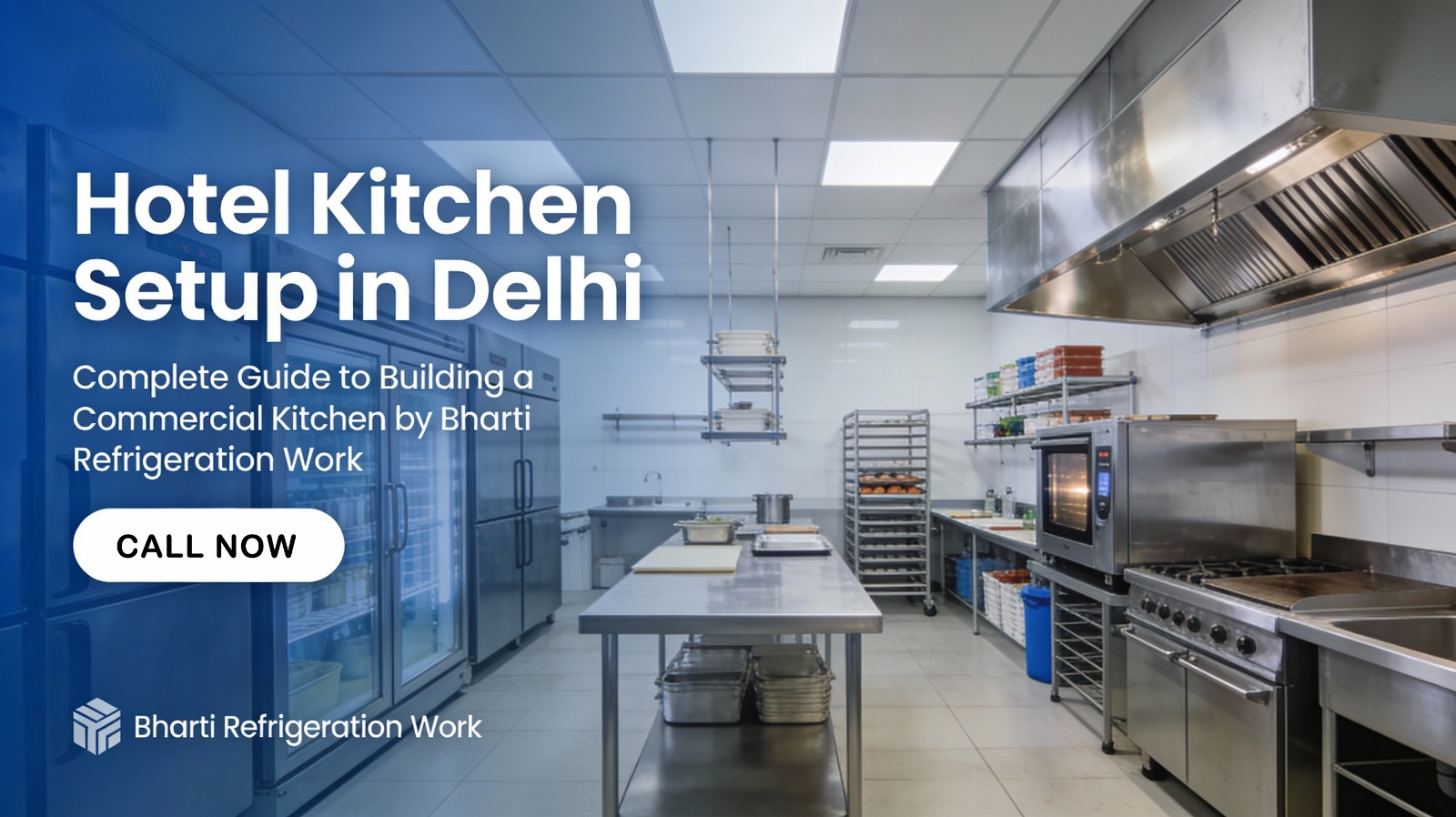
In the bustling streets of Delhi, where hotels compete for every guest’s attention, a well-planned kitchen can make or break your business. Picture this: rushed orders during peak dinner hours, spoiled ingredients from poor storage, or inspections that shut you down before you open. That’s the nightmare no hotel owner wants. A smart commercial kitchen setup ensures smooth operations, keeps food fresh, and delights customers with quick service. In this guide, we’ll walk you through every step to create an efficient space tailored for Delhi’s vibrant food scene. And partnering with experts like Bharti Refrigeration Work? They handle the tricky parts, from custom cooling systems to full compliance, so you focus on what you do best—serving great meals.
Foundational Planning and Regulatory Compliance for Delhi Kitchens
Getting the basics right sets the tone for your entire hotel kitchen setup in Delhi. Rush this stage, and you’ll face delays or costly fixes later. Start with a clear plan that fits your hotel’s size and menu.
Determining Kitchen Size and Layout Efficiency (Flow Planning)
Think of your kitchen as a busy highway. Traffic jams slow everything down, right? The same goes for food prep. Aim for a smooth flow: goods come in, get stored, prepped, cooked, served, and dishes washed.
For small Delhi hotels, a straight-line layout works best. It saves space and cuts steps between stations. Larger spots? Try an island setup. Here, cooking happens in the center, with storage around it. This suits high-volume Indian dishes like curries or tandoori.
Measure your space first. A 500-square-foot kitchen might handle 50 covers; double that for 200. Factor in Delhi’s tight urban footprints. Tools like flow charts help visualize paths. Avoid bottlenecks near the service area. A good layout boosts speed by 20-30%, based on industry benchmarks.
Navigating Delhi’s FSSAI and Municipal Health Licenses
Paperwork feels like a chore, but skip it and face fines or closures. Delhi’s rules are strict for food safety. FSSAI license is your must-have ticket to operate.
Here’s a quick checklist:
- Apply for FSSAI state license if your turnover hits 12 lakhs annually.
- Get a health trade license from the Municipal Corporation of Delhi (MCD).
- Secure fire NOC and pollution control board clearance.
- Water quality certification from local labs.
Kitchen design plays a big role in passing inspections. Wide aisles for movement, proper lighting, and pest-proofing impress officials. Bharti Refrigeration Work guides you here, ensuring layouts meet codes from day one. Delays? They can add weeks. Plan ahead to open on time.
Budgeting and Cost Projection for Commercial Setup
Money talks in any build. For a mid-size Delhi kitchen, expect 50-80 lakhs total. Break it down to stay on track.
Key areas include:
- Equipment: 40-50% of budget. Ovens and fridges eat the most.
- Fabrication and install: 20-30%. Custom counters and plumbing.
- MEP systems: 20%. Wiring, pipes, and vents.
Cheap gear might save now but costs more in repairs. A low-end fridge fails fast in Delhi’s heat, hiking energy bills by 15%. Quality pieces last 10+ years. Use spreadsheets for projections. Add 10% buffer for surprises like utility upgrades. Track every rupee to hit profitability quick.
Essential Equipment Selection and Procurement
Now, gear up your space. The right tools handle Delhi’s diverse cuisines, from street-style chaat to fine-dine biryanis. Pick items that match your volume and save energy.
Core Cooking Line Specifications: Ovens, Ranges, and Grills
Your cooking heart beats here. High-BTU burners tackle heavy Indian pots without fuss. Look for 50,000 BTU per burner for tandoors.
Gas rules in Delhi for its steady supply. But induction? It’s rising with PNG availability. It heats fast and cuts fire risks. For grills, choose cast-iron for even sear on kebabs.
Ovens vary: convection for baking naans, combi for steaming veggies. Test samples before buying. A solid line handles 200+ meals per shift. Bharti’s network sources reliable brands at fair prices.
Choose the Right Commercial Kitchen Equipment
Once the layout is ready, the next step is selecting the right commercial kitchen equipment.
Essential equipment includes:
- Cooking range, burners, tandoors
- Ovens, grills, fryers
- Refrigerators and freezers
- Food prep tables and sinks
- Dishwashers and exhaust hoods
Always buy equipment from a trusted manufacturer. Why?
- You get durable products.
- Spare parts and servicing are available.
- Equipment is energy-efficient and certified.
If you’re in Kolkata, look no further than Bharti Refrigeration Work, a leading hotel commercial kitchen setup manufacturer in Delhi with top-quality products.
The Role of Commercial Refrigeration in Food Safety
Freshness keeps guests coming back. Bad cooling leads to waste and health scares. Walk-in coolers suit big hotels; reach-ins fit smaller ones.
Zoning matters: 0-4°C for veggies, -18°C for meats. Delhi’s FSSAI demands this to stop bacteria. Custom units from Bharti Refrigeration Work handle local spices and herbs that spoil quick.
Pick energy-efficient models. They slash bills in humid summers. Regular checks prevent breakdowns. Invest here—it’s 30% of equipment cost but guards your rep.
Ventilation and Exhaust Systems: A Non-Negotiable Investment
Hot kitchens trap smoke and grease. Poor vents mean sticky air and fire hazards. Type I hoods suck grease from fryers; Type II handles steam from pots.
Delhi’s heat amps this need. Size ducts right: 500 CFM per linear foot of hood. Local Exhaust Ventilation clears fumes at the source.
Install auto-clean filters. They cut maintenance by half. Pros like Bharti ensure setups pass fire checks. Skip this, and inspections fail every time.
Utility Infrastructure: MEP Integration for High Demand
Power, gas, and water fuel your kitchen. Delhi’s grids vary by area, so integrate smart. This backbone prevents blackouts or floods.
Electrical Load Calculation and Three-Phase Power Requirements
Heavy gear needs strong juice. Calculate total load: add amps for each item, like 30A for an oven.
Three-phase power is key for big hotels. It balances load and cuts trips. Dedicated circuits avoid overloads on combi ovens or chillers.
Upgrade panels for 24/7 runs. Delhi outages? Backup generators help. A pro audit spots issues early. This setup boosts efficiency 25%.
Gas Piping and Safety Protocols
Gas powers most cooking here. Follow IGL or HPCL codes for LPG/PNG lines in NCR.
Leak detectors are mandatory. Place them near stoves and cylinders. Shut-off valves save lives in emergencies.
Hire certified plumbers. Poor installs cause 10% of kitchen fires. Test lines before light-up. Safe systems mean peace of mind.
Water Supply, Drainage, and Grease Traps
Clean water in, waste out smooth. Three-compartment sinks wash pots right. Add hand stations every 10 feet.
High-capacity drains handle spills. Grease traps catch fats before sewers. Delhi rules say clean them monthly to avoid clogs.
Use filters for hard water. It protects pipes and gear. Proper setup passes plumbing checks easy.
Fabrication and Material Science for Longevity
Build to last. Delhi’s dust and use demand tough materials. Smart choices cut clean time and repairs.
Selecting the Right Stainless Steel Grades (304 vs. 316)
Steel shines for hygiene. Grade 304 fits most counters—it’s rust-proof and affordable.
Near harsh cleaners or salty marinades, go 316. It fights corrosion better in steamy spots.
Weld seams smooth to block germs. Bharti uses top grades for custom builds. This choice pays off in durability.
Custom Fabrication vs. Modular Equipment Procurement
Tight spaces? Custom counters fit like a glove. Weld them on-site for odd angles in old Delhi buildings.
Modular gear plugs in fast. No major changes needed. Mix both: custom for prep, modular for storage.
Weigh costs—custom runs 20% more but optimizes flow. Pros assess your site first.
Flooring and Wall Finishes for Hygiene and Durability
Slips hurt staff and slow service. Pick non-slip quarry tiles or epoxy. They resist chemicals and water.
Walls need coved edges—no cracks for bugs. Fiberglass panels wipe clean.
These finishes ace inspections. Easy upkeep saves hours weekly. Invest once, maintain easy.
Post-Installation: Commissioning and Partner Support
Launch strong. Test everything before guests arrive. This phase turns plans into reality.
Equipment Commissioning and Staff Training Protocols
Calibrate on day one. Check temps on fridges, test burners.
Handover includes manuals. Train teams on safe use and daily cleans.
Role-play emergencies. This cuts errors by 40%. Smooth start builds confidence.
Establishing Preventative Maintenance Schedules (PM)
Daily: Wipe surfaces, check seals.
Weekly: Clean coils, test vents.
Monthly: Flush lines, inspect wiring.
Focus on fridges and filters. It spots issues early, slashing downtime 50%. Log everything for records.
Choosing a Reliable Local Service Partner (Bharti Refrigeration Work Advantage)
Delhi traffic delays fixes. Local pros arrive quick.
Bharti knows NCR quirks—like power fluctuations. They stock parts and offer 24/7 support.
Their custom refrigeration shines for breakdowns. Partnering cuts repair costs long-term.
Conclusion: Building a Future-Proof Culinary Hub in the Capital
From planning your layout to picking stainless steel, a solid hotel kitchen setup in Delhi demands attention to detail. Nail compliance, choose quality gear, and integrate utilities right. Then, commission and maintain with care. Teaming with Bharti Refrigeration Work streamlines it all, ensuring your commercial kitchen thrives in the capital’s tough market. Ready to start? Reach out to experts today and turn your vision into a profitable, guest-pleasing space that stands the test of time. Your Delhi success story begins now.